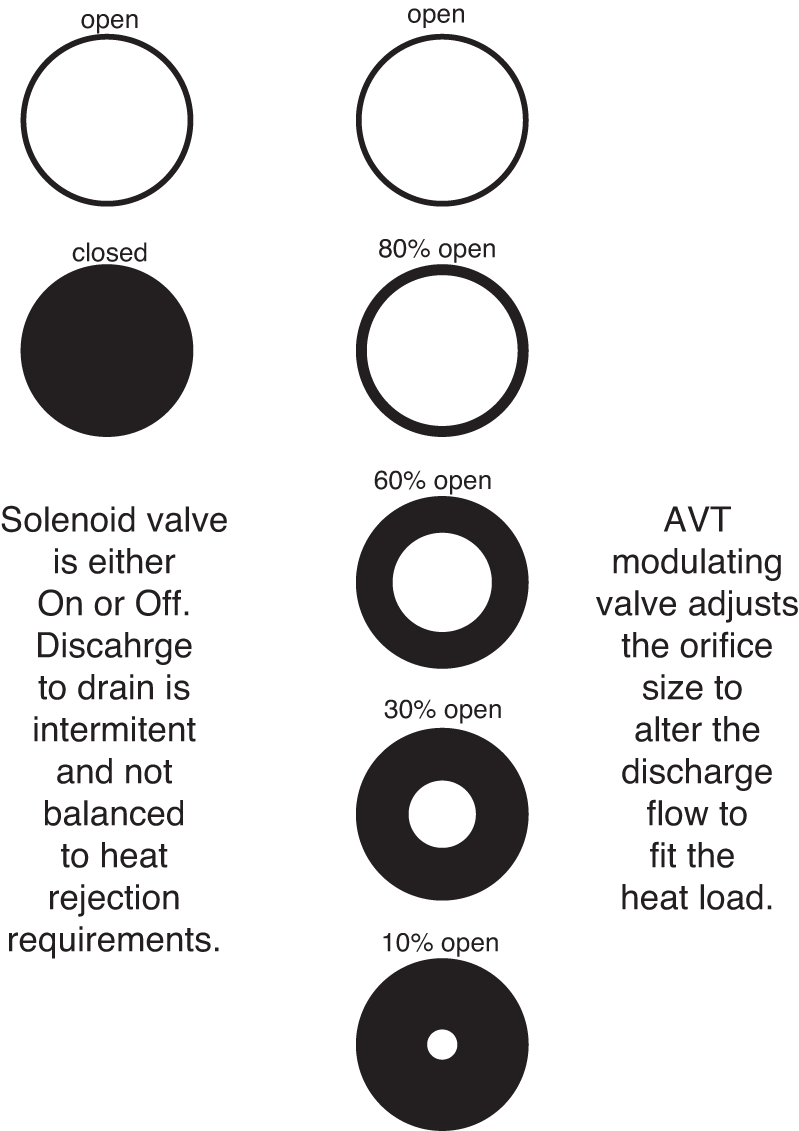
Comparison of Modulating and Solenoid Cooling Valves
INTRODUCTION
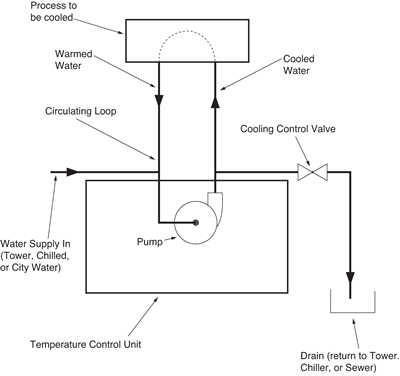
Control of process temperature is accomplished by the measured introduction of cool plant water supply into the unit’s circulating system with the simultaneous discharge of “over temp” water to the drain using a cooling control valve (CCV) activated by a control instrument.
OVERVIEW
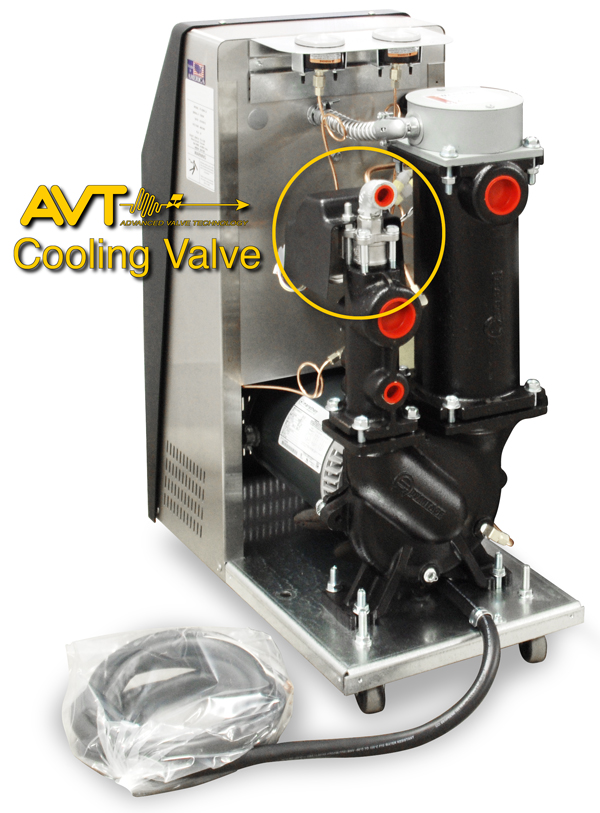
The AVT™ is the plastics industry’s first and only modulating cooling valve, designed specifically for mold temperature control units. It is a part of an overall patent covering the Sentra temperature control unit. Until the introduction of the AVT™ system, all suppliers of temperature control units used on/off solenoid values as the CCV.
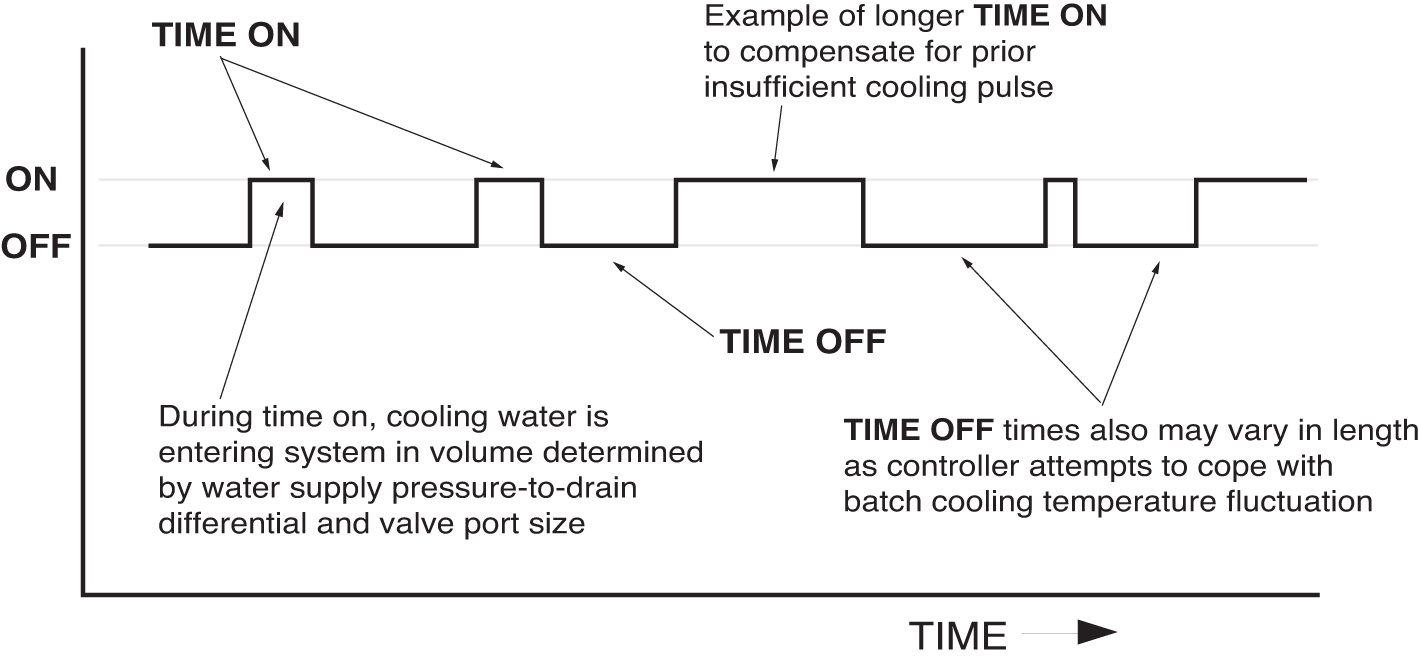
The on/off pulsations of solenoid valves causes the “bath introduction” of a slug of cooling water into the circulating system. This slug creates a distinct temperature fluctuation impact until it is blended into the circulating stream. Refer to the chart on the opposite page for related temperature excursions.
The system pressure also fluctuates as the solenoid pulses causing a condition know as water hammer. The AVT™ is a motor driven ball valve. The ball valve body is manufactured to Advantage specifications by a leading supplier of industrial valves. Using a custom machined coupling, a motor-gear train assembly is attached to the valve stem, and along with a “home switch”, the valve can be controlled by 3000 steps per 90° of valve revolution.
AVT™ electronics compensates for lash inherent in all mechanical assemblies. The controller knows the valve’s position at all times and is programmed to self-diagnose for malfunction.
As the electronic controller learns the dynamics of the heat rejection requirements of the process, the modulating valve orifice is sized to continually maintain the exact cooling flow. No batch cooling slugs, no system pressure changes (water hammer), no over cooling, and no heater cycling to compensate.
The AVT™ is the result of 2 years of research and development by Advantage. Using a test fixture, we evaluated and life tested numerous designs and components. at the same time, the electronic microprocessor programming was developed to drive the valve under all expected fluid temperature and process conditions.
Comparison of Modulating and Solenoid Valves in the Cooling Phase
Helpful Graphs
Temperature Profile with Solenoid Valve
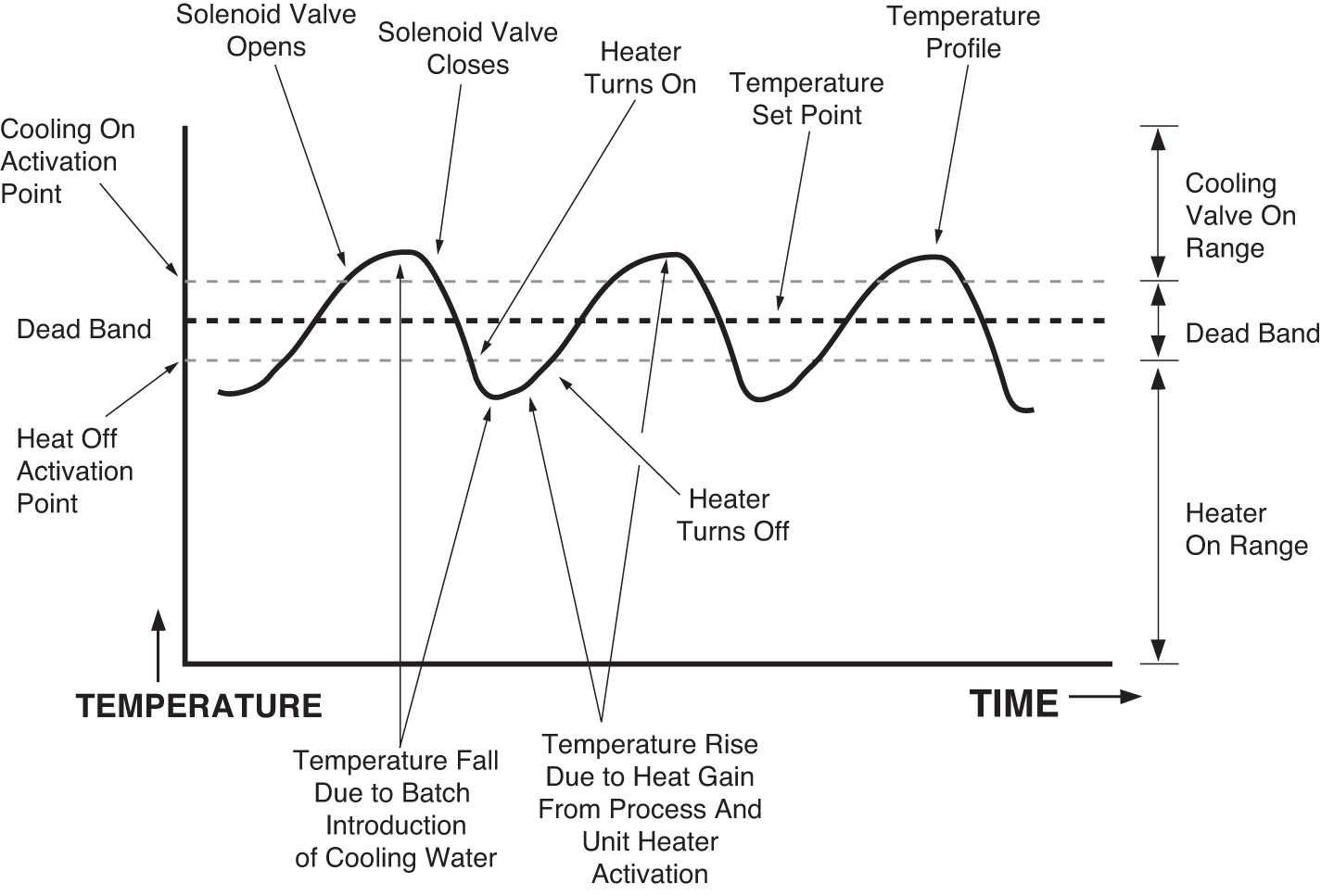
Solenoid Valve Time On / Time Off Profile
Simplied Process Flow Circuit
Modulating & Solenoid Valve Orifice Size